Mata Solid Waste Interceptor

A turning point for Hawaiʻi's home sanitation.
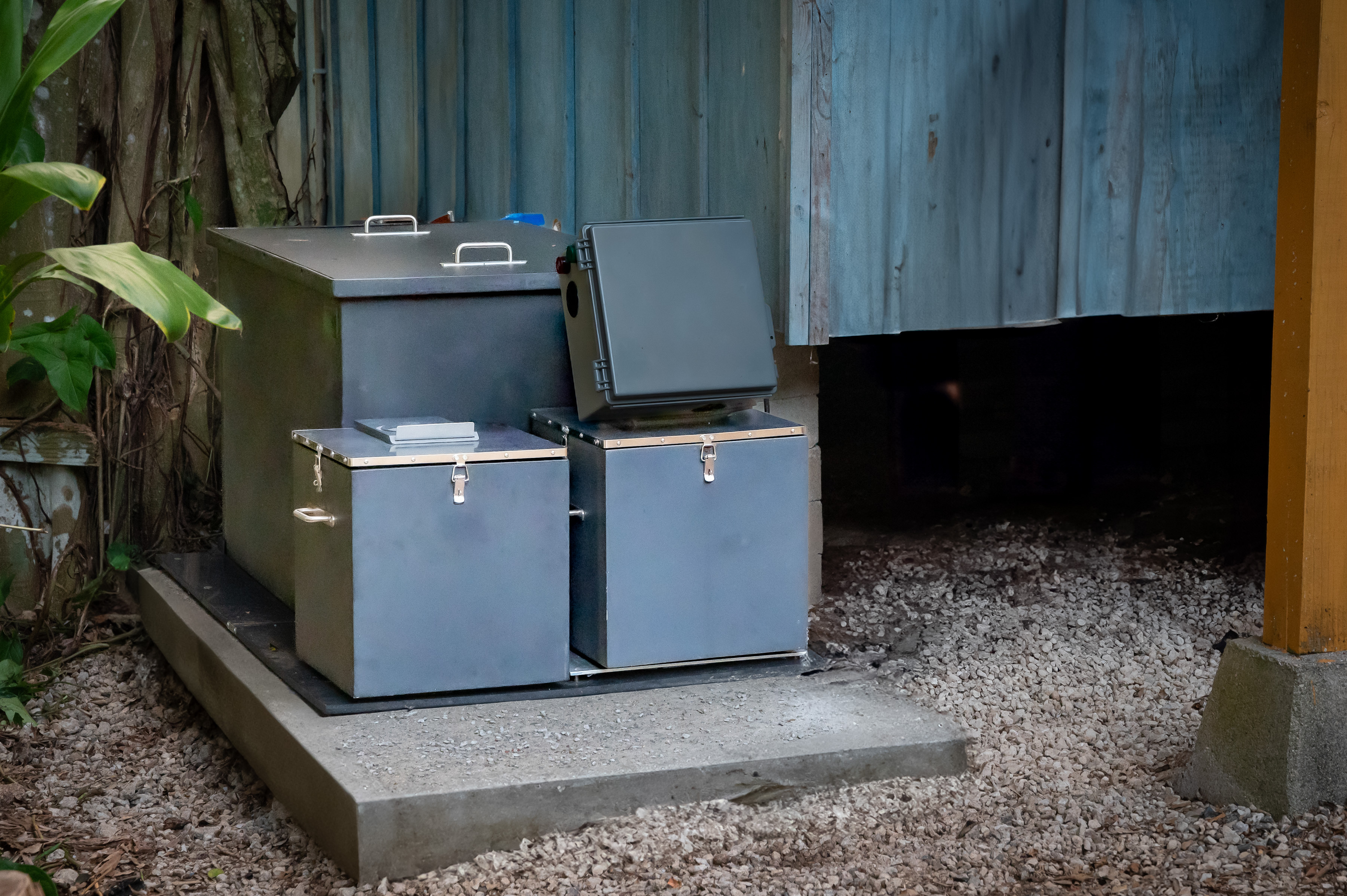
Mata Solid Waste Interceptor, Installed next to a home on a small concrete pad. Mata is a steel blue/grey color.

Designed in Hawaiʻi, for Hawaiʻi

Mata is a compact, above-ground solid waste interceptor designed in Hawaiʻi to meet the islands’ unique geographic and environmental challenges. Installed before a cesspool, leachfield, or sewer connection, it captures solids early — preventing clogs, reducing pump-outs, and keeping contaminants out of groundwater and coastal waters.

Unlike conventional septic systems that require excavation and costly pump-outs, Mata installs on-grade quickly and adapts to almost any site — from tight residential lots to remote developments. Built for island conditions and future-ready design standards, it offers an affordable, low-impact solution that protects both your property and Hawaiʻi’s ecosystems.
Mata Solid Waste Interceptor, Installed next to a home on a small concrete pad. Mata is a steel blue/grey color.
How It works
Mata is a single-family Solid Waste Interceptor for disposal environment protection. Unlike bulky septic tanks that settle out wastewater solids, Mata uses a compact screening process to eliminate excavation and reduce cost. Mata is permitted as an Interceptor under §1009.0 of the Uniform Plumbing Code.

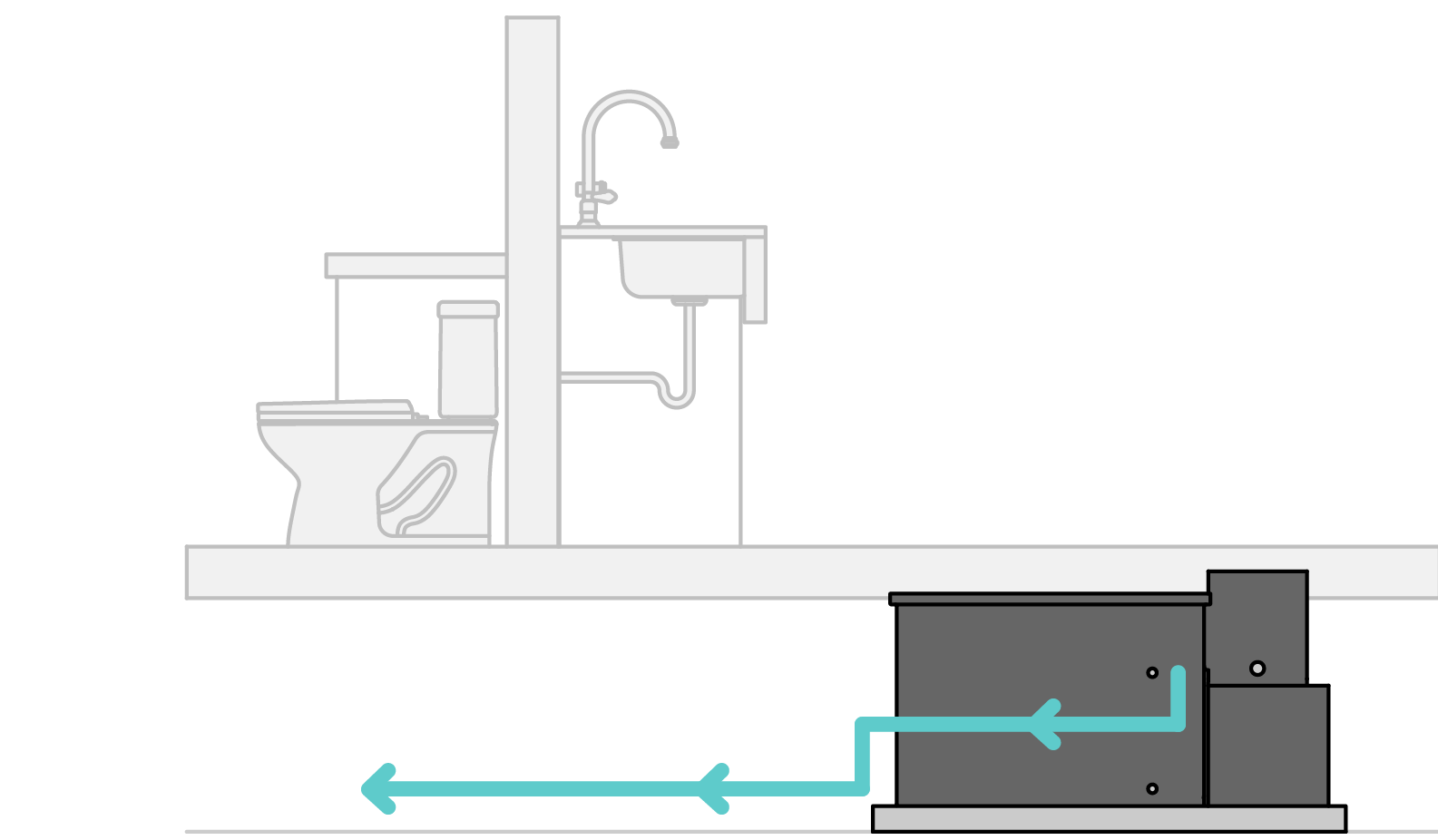
Mata requires a minimum 16" from grade to the inlet.
Diagram. Mata needs minimum 16" clearance from grade to sewer inlet.
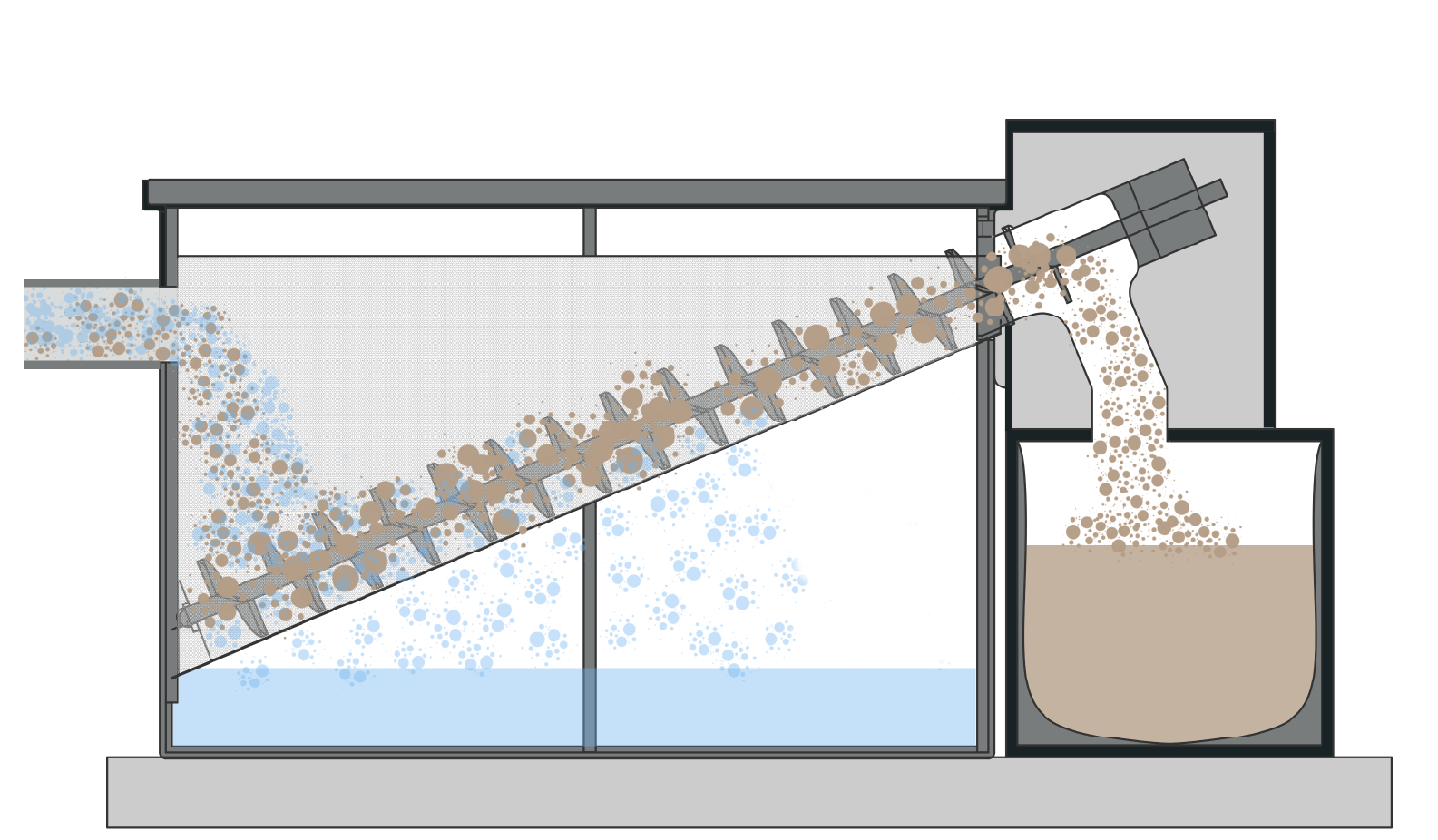
1. Blackwater flows passively into the Mata via the 3" inlet.
2. A screen separates solids while liquids drain to the bottom of the separator tank. An auger diverts solids to the solids bin for drying.
3. Separated liquids are pumped out via the effluent pipe to disposal.
Plumbing Diagram
Design Considerations

Position: Mata can be orientated perpendicular or parallel to house. For homes with a high post and pier foundations, Mata can be placed underneath the home.

Clearance: 3’ clearance required in front of solid bins for maintenance.

Other: All installations should conform to local regulation. Not for use in regions prone to freezing temperatures.

Vent | 1.5” Dia.

Inlet | 3” STD Pipe, >16" above grade, Gravity fed

Overflow Drain | 1.5” Dia. Check valve, no shut off.

Pumped Effluent | 1.5” Dia. Route to disposal area.

Emergency Drain | Gate valve.

Solids Bin
Solids bin to be exchanged every 4 - 12 weeks.
Empty Bin Weight: 10lbs (4.5 KG).
Dehydrated Solids Weight: 20 lbs (9 KG).
Dimensions of Solids Bin: 14" X 14" X 14"
Step 1 of the solids bin exchange process. Solids bins are both in place infront of mata.Home owner is moving the solids bin that is full, preparing to remove the dehydrated solids.Homeowner is removing the dehydrated solids bag from the initial solids bin - solids look lite. Soldis bag is a black mesh bag.Solids bin is shown without lid and an empty solids bag, preparing to be exchanged.Both solids bin are back in position infront of the Mata, the homeowner has left the frame.
Step 1.

Mata runs for 4 - 12 weeks.

Step 2.

Remove solids bin with aged solids.

Step 3.

Withdraw aged solids.

Step 4.

Insert new solids bag.

Step 5.

Slide fresh bin over for aging and position empty bin to receive fresh solids.

Technical Information
The Mata is currently undergoing third party testing with the University of Hawai’i. T
Category
Detail
Loading
1 - 6 Adults, full time.
Max Flow: 90 gpd.
Max Instantaneous Flow: 5 gpm.
Dimensions
28”H, 28”W, 51”L.
Weight
50 LBs (57 kgs), empty.
Empty Solids Bin: 10 lbs (4.5 kg).
Solids Bin + Dehydrated Solids: 20 lbs (9 kg).
Power
120 VAC,
5 Max Amps,
20 Normal Watts,
100 Heater Watts (During solid sterilization, optional direct to solar connection)
Power Whip
6' Cord provided.
Estimated Power Consumption
175 kWh/year (solar dehydration option)
500 kWh/year (electric dehydration option)
Materials
LDPE, Fiberglass, PVC
Solid Removal Efficiency from Blackwater
TSS: 90% Removal
BOD: 80% Removal (Solid Fraction)
TN: 40% Removal (Solid Fraction)

Join Mata waitlist now!

Installs beginning in March of 2026.
Schedule A Call

FREQUENTLY
ASKED QUESTIONS

[    F.A.Q    ]
Will this system work with my home's plumbing?
Maintenance frequency varies based on garden needs but typically occurs on a monthly or seasonal basis.
How much does it cost to install?
The timeline varies based on the project's complexity and size. Small projects may take a few weeks, while larger ones could take a few months. During the consultation, we will provide a more accurate estimate. We will design garden based on your own needs, budget, and time constraints.
Can I install it myself?
The timeline varies based on the project's complexity and size. Small projects may take a few weeks, while larger ones could take a few months. During the consultation, we will provide a more accurate estimate. We will design garden based on your own needs, budget, and time constraints.
Do you offer maintenance services after Mata is installed?
Yes, we offer customizable maintenance packages to suit your garden's needs and budget.